Horse Peak Gelatin Official Website › Blog › What 10:1 Does Not Tell You
What “10:1” On A Botanical Label Does Not Tell You
The notation appears on thousands of supplement panels and is read as a strength rating by almost everybody who sees it. It is not one. It describes a manufacturing step, it cannot be verified after the fact, and the mark that would tell you something is a different mark entirely.
- A plant-to-extract ratio describes how much raw material went in for each part that came out.
- The pharmacopoeia's own paper says such ratios are descriptive and cannot be verified by any analytical method.
- It is nonetheless routinely used as though it were a measure of strength for calculating a dose.
- Standardisation to a named marker compound is the mark that carries real information.
- Two 10:1 extracts of the same plant can differ in solvent, plant part, species and harvest, and the notation records none of it.
What the notation actually says
A 10:1 extract is made by taking ten kilograms of plant material and processing it down to one kilogram of finished extract. Solvent goes in, soluble material comes out with it, the solvent is removed and what remains is concentrated relative to the starting material.
That is the whole of what the notation records: a ratio of input mass to output mass. It is a statement about a factory process, not about the product's potency.
| What the label says | What it describes | What it does not describe |
|---|---|---|
| 10:1 | Ten parts of raw plant reduced to one part of extract | How much of any active compound ended up in the extract |
| 4:1 | A gentler concentration, four parts to one | Whether the compounds that matter survived the process |
| 35-45:1 | A much more concentrated preparation | Anything at all, without a standardisation figure beside it |
| Standardised to 20% icariin | A measured content of a named compound | This is the mark that actually means something |
| Extract, no ratio, no standardisation | That an extraction happened | Everything else |
Rows one to three are process descriptions. Row four is a specification. The difference between the two is the whole subject of this post.
The arithmetic people do with it, and why it is only half right
The natural move is to multiply. A hundred micrograms of a 10:1 extract represents a milligram of the original plant, so the reasoning goes, and that arithmetic is correct as far as mass is concerned.
Where it breaks down is on content. Whether the milligram of plant that the extract represents contributed any of the compounds the research measured is a question the multiplication cannot answer, because a concentration step removes mass selectively and the notation does not say what it removed.
Why nobody can check it afterwards
The United States Pharmacopeia group published a paper on exactly this, and its conclusions are blunter than anything a commercial website would write unprompted. Plant-to-extract ratios are descriptive. No method of analysis can verify one from a finished product. And they are nonetheless often used as a measure of extract strength for dosage calculations.
Read that in order and the problem is obvious. A number that cannot be checked is being used to calculate doses. Every party downstream of the extractor, including the brand, the retailer and the buyer, is taking the ratio on trust.
This is not an accusation against any particular supplier. It is a structural feature of how botanical extracts are described, and it is the reason a serious label carries something more specific.
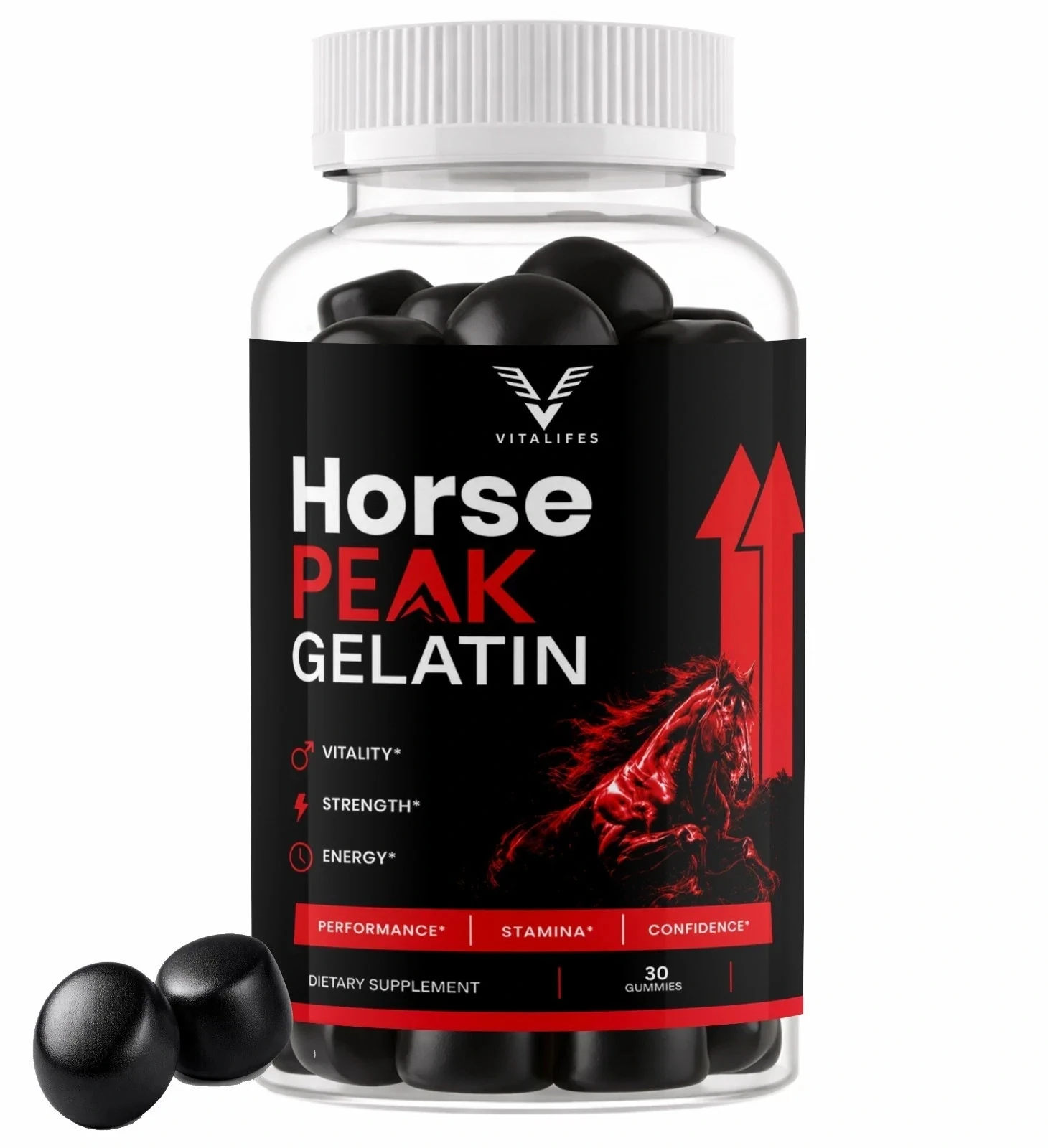
Four rows on the Horse Peak Gelatin panel carry this notation, and the panel prints the weights
Which is what lets a reader do the arithmetic at all. One gummy a day and 60 days from the date of purchase.
Two bottles $158 · six bottles $294 · 60-day money-back guarantee
Order Horse Peak Gelatin On The Official WebsiteOne gummy a day · 30 per bottle · lot HOR-26/MY-5544
The mark that does carry information
Standardisation is the alternative and it is a different kind of statement entirely. A standardised extract declares a measured content of a named compound: twenty per cent icariin, at least 112.5 mg of furostanol saponins, fifty per cent polyphenols.
That is a specification rather than a process description. It can be assayed, it can be verified by a laboratory, and it is what the better clinical trials used.
The positive tribulus trial is the clearest illustration. It used a 35 to 45:1 extract standardised to at least 112.5 mg of furostanol saponins per daily dose. Both halves of that description are load-bearing, and a product matching only the ratio would not be matching the material.
- A ratio without a standardisation tells you a concentration step happened.
- A standardisation without a ratio tells you what is in the extract, which is the question that matters.
- Both together is the mark of a supplier who expects to be checked.
- Neither is the most common arrangement on retail shelves, and it tells you nothing at all.
Six things two identical ratios can hide
Two bottles printing 10:1 for the same plant can contain materially different material, for six separate reasons.
| What varies between two 10:1 extracts | Why it matters |
|---|---|
| The solvent | Water, ethanol and supercritical carbon dioxide pull out different compounds from the same plant |
| The plant part | Root, leaf, seed and fruit are different raw materials with different chemistries |
| The growing conditions | Soil, altitude and harvest timing all change what is in the plant before anybody extracts it |
| The species and subspecies | Particularly acute in Epimedium, where supply is botanically variable |
| Where the ratio is measured | Fresh weight and dried weight give different numbers for the same process |
| What was discarded | A concentration step removes mass; which mass it removed is the question a ratio cannot answer |
Six variables, none of which a ratio records. Two products can print the same notation and contain materially different material.
Epimedium is the extreme case. A paper on how variable Epimedium material is documents differences between supplied batches large enough that the botanical identity itself needs confirming, let alone the concentration. A 10:1 notation on that particular row is doing very little work.
The practical upshot is that ingredient names and ratios are the least informative things on a botanical panel, and the weight beside them is the most. That is the reverse of how most packaging is designed to be read.
A worked example from one real panel
Applying all of the above to the label this website sells produces a short and specific reading.
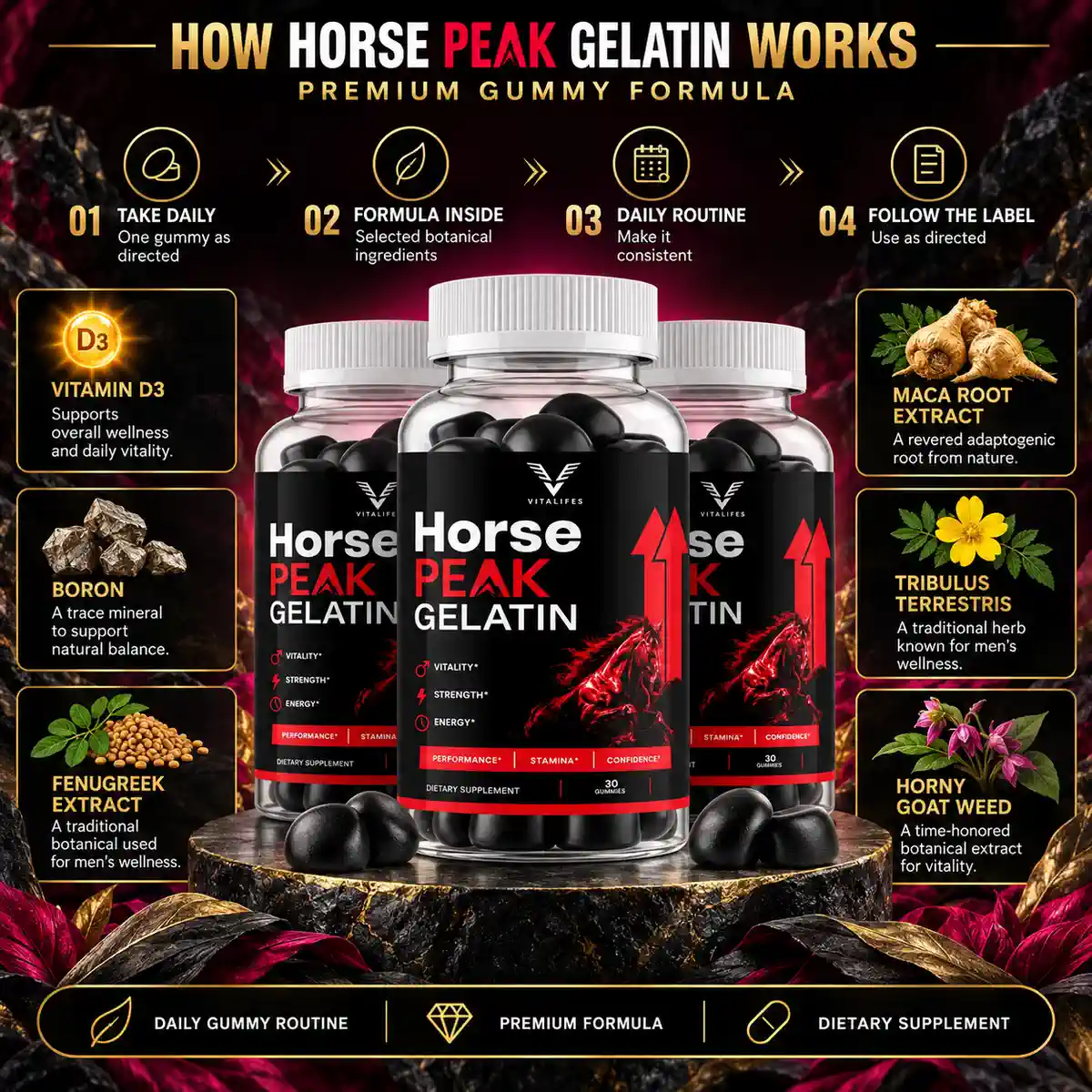
- Four rows carry 10:1 at 100 micrograms each. Fenugreek, maca, tribulus and Epimedium.
- None of the four carries a standardisation. No marker compound and no percentage appears against any of them.
- Three name the plant part. Seed, root and leaf, which is better than the category norm and is genuinely useful information.
- The mass arithmetic gives about a milligram of raw herb per row. Set against trials at 600 to 3,000 mg, covered in its own post on this blog.
- The panel prints every figure. Which is why any of this can be worked out, and why a proprietary blend would have ended the exercise at step one.
They are ingredient names carrying a category signature rather than doses carrying an effect. The ingredients page says the same thing with the trial doses printed beside each one, and the benefits page sets the claims ceiling accordingly.
Why the notation persists
If a ratio carries so little information, its universality needs explaining. Three reasons, in descending order of charity.
It is genuinely useful to a formulator
Somebody buying extract by the kilogram to build a formula needs to know the concentration factor to calculate quantities, and within a known supply chain the number is meaningful. It was never designed as a consumer-facing mark.
It is cheaper than standardisation
Assaying a marker compound batch by batch costs money. A ratio is a description of a process that has already happened and costs nothing to state.
It reads as a strength rating
Ten to one sounds like ten times stronger, and nothing on a panel corrects that impression. That is the least charitable explanation and it is not available in every case, but it cannot be ruled out of any of them.
What to do with a label that only gives a ratio
- Do the mass arithmetic anyway. It sets an upper bound on how much plant the row can represent, and an upper bound is information.
- Look for the plant part. Its presence tells you somebody was paying attention; its absence tells you the opposite.
- Look for a marker compound. Its absence is the norm, which is why its presence is worth paying for.
- Compare weights, not names. Two panels with identical ingredient lists can be entirely different products.
- Treat the format as part of the answer. An assay of melatonin gummies against their own labels found wide variation between printed and measured content in that format, which is a reason to buy a gummy from a channel with a lot number behind it.
- Remember that concentration cuts both ways. The US Drug-Induced Liver Injury Network's herbal data concerns concentrated extracts at gram doses, not milligram rows, and a very small amount of a very concentrated material is still a very small amount.
The seven-check scorecard on this website builds those habits into a routine that takes about three minutes a bottle, and it scores this product in public at the end of it.
References
- Monagas M, Brendler T, Brinckmann J, et al. Understanding plant to extract ratios in botanical extracts. Front Pharmacol. 2022;13:981978. PMID 36249773. https://pubmed.ncbi.nlm.nih.gov/36249773/
- Yong EL, Wong SP, Shen P, et al. Standardization and evaluation of botanical mixtures: lessons from a traditional Chinese herb, Epimedium, with oestrogenic properties. Novartis Found Symp. 2007;282:173-88. PMID 17913231. https://pubmed.ncbi.nlm.nih.gov/17913231/
- Kamenov Z, Fileva S, Kalinov K, Jannini EA. Evaluation of the efficacy and safety of Tribulus terrestris in male sexual dysfunction-A prospective, randomized, double-blind, placebo-controlled clinical trial. Maturitas. 2017;99:20-26. PMID 28364864. https://pubmed.ncbi.nlm.nih.gov/28364864/
- Cohen PA, Avula B, Wang YH, Katragunta K, Khan I. Quantity of Melatonin and CBD in Melatonin Gummies Sold in the US. JAMA. 2023;329(16):1401-1402. PMID 37097362. https://pubmed.ncbi.nlm.nih.gov/37097362/
- Navarro VJ, Barnhart H, Bonkovsky HL, et al. Liver injury from herbals and dietary supplements in the U.S. Drug-Induced Liver Injury Network. Hepatology. 2014;60(4):1399-408. PMID 25043597. https://pubmed.ncbi.nlm.nih.gov/25043597/