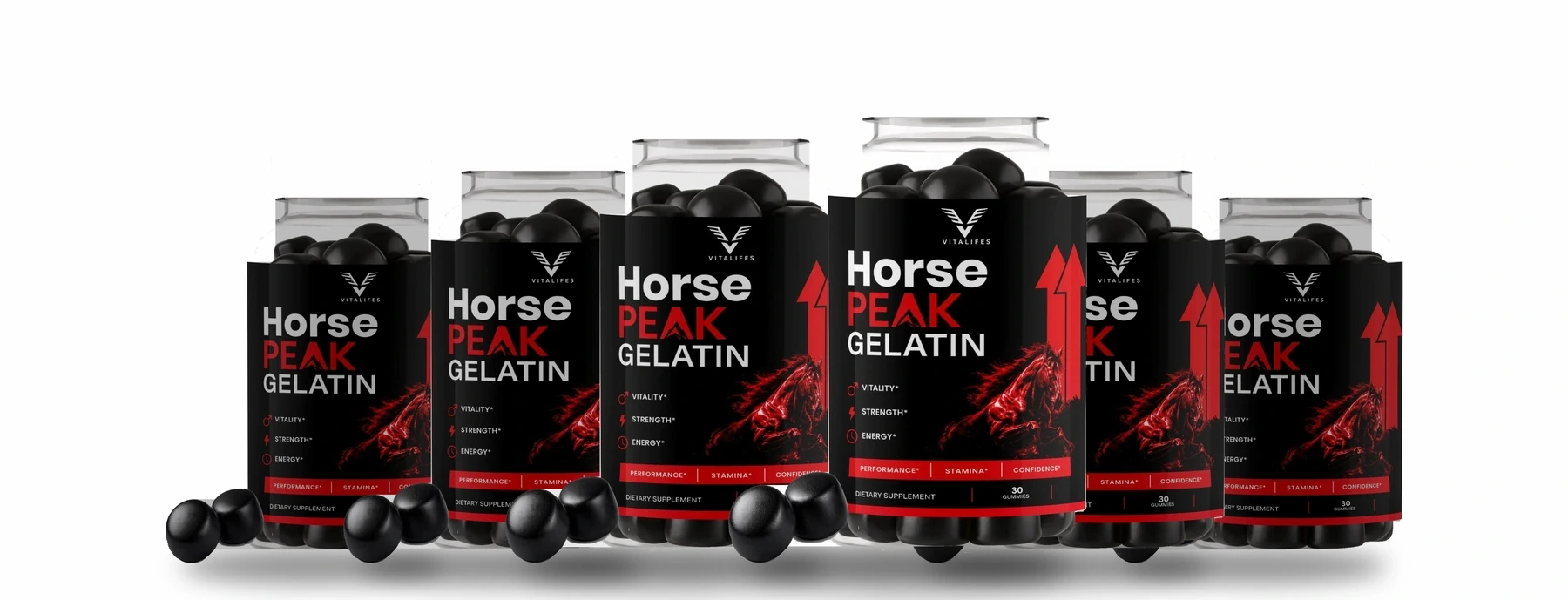
Horse Peak Gelatin Official Website › Evidence Guide
Evidence GuideMen's Vitality Supplements: What The Evidence Supports
Two things beat every ingredient in this category, and neither is a supplement.
Exercise and lifestyle change have the strongest evidence. Among the ingredients, vitamin D is a real nutrient with little sex-hormone effect, boron rests on eight men for a week, fenugreek and maca have honest trials at gram doses, and Epimedium has no human oral dosing trial.
Written for somebody who will never buy anything from this website.
The two comparators that beat the whole category
Before any ingredient, the two things with better evidence than all of them.
Any honest guide to this aisle has to start by naming what a supplement is competing against, and in this category the two strongest interventions are not products.
A meta-analysis of aerobic exercise reported improvements in erectile function from structured training, and a 2026 meta-analysis of lifestyle interventions found the same pattern across weight, diet, smoking and sleep. No botanical on any shelf has matched that evidence base.
That is not an argument against supplements. It is the context a reader needs before spending anything, because a man who buys a bottle instead of walking has made the worse of the two available decisions and a guide that does not say so is not a guide.
Correcting a nutrient shortfall, and doing so conveniently enough that it actually happens every day. That is a real job, it is the job vitamin D does in this category, and it is a smaller claim than most packaging makes.
Vitamin D: the best-evidenced row in the category, for the wrong reasons
Vitamin D turns up on most labels in this aisle and it is the ingredient whose literature is strongest and whose relevance to vitality is weakest. Both halves of that sentence matter.
As a nutrient it is uncontroversial. It has an established role in calcium handling, bone, muscle function and immunity; it has a Daily Value, a dose response and an upper intake level of 4,000 IU a day for adults. A person who is short of it and stops being short of it has made a real change.
As a sex-hormone intervention it is thin. The 2026 meta-analysis of vitamin D and testosterone pooled the randomised evidence, and the trial in 307 men gave 1,400 IU a day after a loading dose for 150 days and found no overall change in sex steroids. A 2025 review of vitamin D and erectile function describes an association rather than a demonstrated effect.
- A large printed figure here is a real dose of a real nutrient, unlike most botanical rows.
- It is worth adding up against everything else in the cupboard, because multivitamins, calcium and bone formulas all carry it.
- The honest benefit is correcting a shortfall, and a man whose level is already comfortable is topping up a full tank.
- The 2024 Endocrine Society guideline appraisal is the fairest summary of where routine supplementation does and does not help.
Boron: eight men, one week, and an enormous reputation
Boron is a trace element with no established human requirement and a place on a great many vitality labels. Its reputation rests on a body of work small enough to describe in a paragraph.
A 1987 metabolic-unit study in twelve postmenopausal women at 3 mg a day started the interest. A 2011 study in eight healthy men gave 10 mg a day for a week and reported a rise in free testosterone with falls in sex hormone binding globulin and oestradiol. Eight men, seven days, no control group.
That is the study behind almost every boron row in this aisle. A review of boron in human nutrition and a 2026 review of boron as a dietary supplement cover the wider ground, which includes bone, magnesium handling and inflammatory markers and is more interesting than the hormone claim.
What makes boron unusual on these labels is that the researched amount is small enough for a supplement to carry. Ten milligrams is achievable, the adult upper intake level is 20 mg, and ordinary diets supply one to three milligrams from fruit, nuts and legumes. A label printing 7 mg is inside the range the research used, which is not something that can be said of most botanical rows in this category.
The four botanicals, and the doses their trials ran at
| Ingredient | What the trials ran | What they found | How it usually appears |
|---|---|---|---|
| Fenugreek seed extract | 600 mg a day for 12 weeks; 600, 1,200 and 1,800 mg in a 2024 dose-ranging study | Improvements in self-reported androgen symptoms and libido scores | Often at a few hundred milligrams, sometimes at micrograms |
| Maca root | 1,500 to 3,000 mg a day for 12 weeks; 2,400 mg in men with mild difficulty | An effect on sexual desire with no measured change in serum hormones | A food-dose ingredient, frequently under-dosed on labels |
| Tribulus terrestris | 1,500 mg a day of a 35-45:1 extract standardised to furostanol saponins; 800 mg in a null trial | Mixed, and the systematic reviews are not kind | Almost always without the standardisation the positive trial used |
| Epimedium, horny goat weed | No human oral dosing trial | Icariin behaves as a weak PDE5 inhibitor in glassware and in rodents | A recognisable name at a token amount |
The dose column is what the published studies administered. It is the number to hold beside whatever a label prints.
Taking them in turn: the fenugreek trial and its libido companion are honest twelve-week studies at 600 mg, with a 2024 dose-ranging study going higher. The maca trial is the one that made its name and the systematic review is cautiously positive, both at gram doses. The positive tribulus trial used a standardised extract at 1,500 mg while an 800 mg arm did nothing, and a systematic review of the aphrodisiac claim did not support it.
Epimedium is the outlier. The enzyme measurement that made icariin interesting was a test-tube experiment, the follow-up work was cells and rats, and a 2022 review is candid about how little has followed. Epimedium material also varies widely between suppliers, so two labels printing one weight need not be selling one thing.
What a plant-to-extract ratio does and does not tell you
The notation 10:1 appears on thousands of labels and is the single most misread mark in the aisle. It describes a manufacturing step: ten parts of raw plant reduced to one part of finished extract.
The United States Pharmacopeia group's own paper on the subject says plainly that such ratios are descriptive, that no analytical method can verify one after the fact, and that they are nonetheless routinely used as though they were a measure of strength for dosage calculations.
Two consequences follow for a reader with a bottle in his hand. First, the multiplication is simple: 100 micrograms of a 10:1 extract works back to about a milligram of raw herb. Second, a ratio says nothing about whether the compounds that matter were concentrated, which is what standardisation to a named marker would tell you and what most labels in this category do not carry.
- A named marker compound with a percentage: standardised to a stated amount of furostanol saponins, or of icariin, or of any other compound the research measured.
- The plant part, in brackets after the binomial. A root and a leaf are different raw materials.
- The binomial itself, spelled correctly, which is a proofreading check as much as a botanical one.
- A weight in the same units the trials used, so the comparison can be made without arithmetic.
The record of the aisle itself
One fact about this category matters more than any individual label in it, and it is not printed on any of them.
An analysis of ten years of FDA adulteration warnings found sexual-enhancement products the largest single category of warnings, most often for undeclared sildenafil analogues. A review of how those analogues are detected describes how ordinary a spiked product looks until somebody assays it.
The reason this matters clinically rather than merely legally is the interaction between PDE5 inhibitors and nitrates, which can drop blood pressure dangerously. A man taking a nitrate for angina who swallows an unlabelled analogue has no way of knowing what he has taken.
Nothing in that paragraph is an accusation about any particular product. It is a base rate, and the sensible response to a base rate is to buy from a channel with a named lot, a telephone number and a refund desk rather than from an anonymous listing.
Two further category facts are worth carrying. A review asking whether testosterone boosters raise testosterone found the evidence base thinner than the marketing, and an analysis of what is actually in male performance supplements is a useful corrective to assumptions about what these bottles contain. A meta-analysis of herbal supplements in this space and a 2026 update both report modest effects where any exist.
When the answer is not a supplement
A guide that never says this is not being useful. Some of what sends men to this aisle is better dealt with elsewhere, and recognising which is which costs nothing.
Erectile dysfunction is common and it is treatable, and its association with cardiovascular disease is strong enough that persistent difficulty is worth having assessed rather than managed privately with a bottle. MedlinePlus is a plain place to start reading about it.
Persistent fatigue has the same shape. Thyroid disease, iron deficiency, sleep apnoea and depression all present as low energy, all are diagnosable, and none of them responds to a botanical extract. The NIH complementary health centre's guidance on using supplements sensibly is worth ten minutes before any first purchase.
None of that makes a supplement a bad idea. It makes it a supplement: something taken alongside an accurate picture of what is going on, rather than instead of getting one.
Where this leaves a reader with a bottle in front of him
The category's ingredient list is not fraudulent. Most of these names have some human research behind them and two of them have a great deal. What separates one bottle from another is almost never which names appear on the panel; it is the amounts beside them and whether the label lets you check.
The companion page turns that into seven checks with a pass or fail against each, and applies them to Horse Peak Gelatin, the product this website sells. It fails three of the seven. The scorecard is here.
Sources for this guide
Every paper named above, grouped by the ingredient it belongs to.
- Khera M, Bhattacharyya S, Miller LE. Effect of aerobic exercise on erectile function: systematic review and meta-analysis of randomized controlled trials. J Sex Med. 2023;20(12):1369-1375. PMID 37814532. https://pubmed.ncbi.nlm.nih.gov/37814532/
- Li T, He X, Huang W, et al. Efficacy of lifestyle interventions in treating erectile dysfunction: a systematic review and meta-analysis of randomized controlled trials. J Sex Med. 2026;23(6). PMID 42143598. https://pubmed.ncbi.nlm.nih.gov/42143598/
- Paez-Allendes L, Valenzuela-Fuenzalida JJ, Moya MP, et al. Vitamin D Supplementation, Total Testosterone, and Androgen Bioavailability Markers in Adult Men: A Systematic Review and Meta-Analysis of Randomized Controlled Trials. Nutrients. 2026;18(13). PMID 42451097. https://pubmed.ncbi.nlm.nih.gov/42451097/
- Holt R, Yahyavi SK, Kooij I, et al. Effects of vitamin D on sex steroids, luteinizing hormone, and testosterone to luteinizing hormone ratio in 307 infertile men. Andrology. 2024;12(3):553-560. PMID 37555466. https://pubmed.ncbi.nlm.nih.gov/37555466/
- Matukaitiene R, Pikelyte A, Zilaitiene B, et al. The Association Between Vitamin D Levels and Erectile Dysfunction in Men: A Systematic Review. J Clin Med. 2025;14(24). PMID 41464531. https://pubmed.ncbi.nlm.nih.gov/41464531/
- Institute of Medicine (US) Committee to Review Dietary Reference Intakes for Vitamin D and Calcium; Ross AC, Taylor CL, Yaktine AL, Del Valle HB, editors. Tolerable Upper Intake Levels: Calcium and Vitamin D. In: Dietary Reference Intakes for Calcium and Vitamin D. Washington (DC): National Academies Press (US); 2011. https://www.ncbi.nlm.nih.gov/books/NBK56058/
- Pilz S, Pludowski P, Kraus DA, et al. The 2024 Endocrine Society Guideline on Vitamin D: Comprehensive Summary and Critical Appraisal. Nutrients. 2026;18(9). PMID 42124073. https://pubmed.ncbi.nlm.nih.gov/42124073/
- Naghii MR, Mofid M, Asgari AR, et al. Comparative effects of daily and weekly boron supplementation on plasma steroid hormones and proinflammatory cytokines. J Trace Elem Med Biol. 2011;25(1):54-8. PMID 21129941. https://pubmed.ncbi.nlm.nih.gov/21129941/
- Nielsen FH, Hunt CD, Mullen LM, Hunt JR. Effect of dietary boron on mineral, estrogen, and testosterone metabolism in postmenopausal women. FASEB J. 1987;1(5):394-7. PMID 3678698. https://pubmed.ncbi.nlm.nih.gov/3678698/
- Pizzorno L. Nothing Boring About Boron. Integr Med (Encinitas). 2015;14(4):35-48. PMID 26770156. https://pubmed.ncbi.nlm.nih.gov/26770156/
- Kuru-Yasar R, Yarat A. The Role of Boron in the Diet and as a Dietary Supplement. Handb Exp Pharmacol. 2026. PMID 42185672. https://pubmed.ncbi.nlm.nih.gov/42185672/
- Institute of Medicine (US) Panel on Micronutrients. Arsenic, Boron, Nickel, Silicon, and Vanadium. In: Dietary Reference Intakes for Vitamin A, Vitamin K, Arsenic, Boron, Chromium, Copper, Iodine, Iron, Manganese, Molybdenum, Nickel, Silicon, Vanadium, and Zinc. Washington (DC): National Academies Press (US); 2001. https://www.ncbi.nlm.nih.gov/books/NBK222322/
- Rao A, Steels E, Inder WJ, et al. Testofen, a specialised Trigonella foenum-graecum seed extract reduces age-related symptoms of androgen decrease, increases testosterone levels and improves sexual function in healthy aging males in a double-blind randomised clinical study. Aging Male. 2016;19(2):134-42. PMID 26791805. https://pubmed.ncbi.nlm.nih.gov/26791805/
- Steels E, Rao A, Vitetta L. Physiological aspects of male libido enhanced by standardized Trigonella foenum-graecum extract and mineral formulation. Phytother Res. 2011;25(9):1294-300. PMID 21312304. https://pubmed.ncbi.nlm.nih.gov/21312304/
- Lee-Odegard S, Gundersen TE, Drevon CA. Effect of a plant extract of fenugreek (Trigonella foenum-graecum) on testosterone in blood plasma and saliva in a double blind randomized controlled intervention study. PLoS One. 2024;19(9):e0310170. PMID 39288153. https://pubmed.ncbi.nlm.nih.gov/39288153/
- Gonzales GF, Cordova A, Vega K, et al. Effect of Lepidium meyenii (MACA) on sexual desire and its absent relationship with serum testosterone levels in adult healthy men. Andrologia. 2002;34(6):367-72. PMID 12472620. https://pubmed.ncbi.nlm.nih.gov/12472620/
- Shin BC, Lee MS, Yang EJ, et al. Maca (L. meyenii) for improving sexual function: a systematic review. BMC Complement Altern Med. 2010;10:44. PMID 20691074. https://pubmed.ncbi.nlm.nih.gov/20691074/
- Kamenov Z, Fileva S, Kalinov K, Jannini EA. Evaluation of the efficacy and safety of Tribulus terrestris in male sexual dysfunction-A prospective, randomized, double-blind, placebo-controlled clinical trial. Maturitas. 2017;99:20-26. PMID 28364864. https://pubmed.ncbi.nlm.nih.gov/28364864/
- Santos CA Jr, Reis LO, Destro-Saade R, et al. Tribulus terrestris versus placebo in the treatment of erectile dysfunction: A prospective, randomized, double blind study. Actas Urol Esp. 2014;38(4):244-8. PMID 24630840. https://pubmed.ncbi.nlm.nih.gov/24630840/
- Qureshi A, Naughton DP, Petroczi A. A systematic review on the herbal extract Tribulus terrestris and the roots of its putative aphrodisiac and performance enhancing effect. J Diet Suppl. 2014;11(1):64-79. PMID 24559105. https://pubmed.ncbi.nlm.nih.gov/24559105/
- Dell'Agli M, Galli GV, Dal Cero E, et al. Potent inhibition of human phosphodiesterase-5 by icariin derivatives. J Nat Prod. 2008;71(9):1513-7. PMID 18778098. https://pubmed.ncbi.nlm.nih.gov/18778098/
- Shindel AW, Xin ZC, Lin G, et al. Erectogenic and neurotrophic effects of icariin, a purified extract of horny goat weed (Epimedium spp.) in vitro and in vivo. J Sex Med. 2010;7(4 Pt 1):1518-28. PMID 20141584. https://pubmed.ncbi.nlm.nih.gov/20141584/
- Niu Y, Lin G, Pan J, et al. Deciphering the myth of icariin and synthetic derivatives in improving erectile function from a molecular biology perspective: a narrative review. Transl Androl Urol. 2022;11(7):1007-1022. PMID 35958901. https://pubmed.ncbi.nlm.nih.gov/35958901/
- Yong EL, Wong SP, Shen P, et al. Standardization and evaluation of botanical mixtures: lessons from a traditional Chinese herb, Epimedium, with oestrogenic properties. Novartis Found Symp. 2007;282:173-88. PMID 17913231. https://pubmed.ncbi.nlm.nih.gov/17913231/
- Monagas M, Brendler T, Brinckmann J, et al. Understanding plant to extract ratios in botanical extracts. Front Pharmacol. 2022;13:981978. PMID 36249773. https://pubmed.ncbi.nlm.nih.gov/36249773/
- Tucker J, Fischer T, Upjohn L, Mazzera D, Kumar M. Unapproved Pharmaceutical Ingredients Included in Dietary Supplements Associated With US Food and Drug Administration Warnings. JAMA Netw Open. 2018;1(6):e183337. PMID 30646238. https://pubmed.ncbi.nlm.nih.gov/30646238/
- Patel DN, Li L, Kee CL, et al. Screening of synthetic PDE-5 inhibitors and their analogues as adulterants: analytical techniques and challenges. J Pharm Biomed Anal. 2014;87:176-90. PMID 23721687. https://pubmed.ncbi.nlm.nih.gov/23721687/
- Morrisette MJ, Dunn SP. Phosphodiesterase Type 5 Inhibitors and Oral Nitrates in Male Patients with Ischemic Heart Disease. Curr Cardiol Rep. 2023;25(6):553-560. PMID 37074567. https://pubmed.ncbi.nlm.nih.gov/37074567/
- Morgado A, Tsampoukas G, Sokolakis I, et al. Do "testosterone boosters" really increase serum total testosterone? A systematic review. Int J Impot Res. 2024;36(4):348-364. PMID 37697053. https://pubmed.ncbi.nlm.nih.gov/37697053/
- Kuchakulla M, Narasimman M, Soni Y, et al. A systematic review and evidence-based analysis of ingredients in popular male testosterone and erectile dysfunction supplements. Int J Impot Res. 2021;33(3):311-317. PMID 32358510. https://pubmed.ncbi.nlm.nih.gov/32358510/
- Borrelli F, Colalto C, Delfino DV, et al. Herbal Dietary Supplements for Erectile Dysfunction: A Systematic Review and Meta-Analysis. Drugs. 2018;78(6):643-673. PMID 29633089. https://pubmed.ncbi.nlm.nih.gov/29633089/
- Ho CY, Hsu CH, Chien TJ. Herbal dietary supplements for erectile dysfunction: A systematic review and meta-analysis of randomized-controlled trials. J Tradit Complement Med. 2026;16(1):109-120. PMID 41696741. https://pubmed.ncbi.nlm.nih.gov/41696741/
- Kessler A, Sollie S, Challacombe B, Briggs K, Van Hemelrijck M. The global prevalence of erectile dysfunction: a review. BJU Int. 2019;124(4):587-599. PMID 31267639. https://pubmed.ncbi.nlm.nih.gov/31267639/
- An J, Xiang B, Peng J, et al. Understanding the erectile dysfunction-cardiovascular disease connection: clinical and pathophysiological insights. Sex Med Rev. 2025;13(3):406-422. PMID 40153594. https://pubmed.ncbi.nlm.nih.gov/40153594/
- Erectile Dysfunction. MedlinePlus, U.S. National Library of Medicine. https://medlineplus.gov/erectiledysfunction.html
- Using Dietary Supplements Wisely. National Center for Complementary and Integrative Health, National Institutes of Health. https://www.nccih.nih.gov/health/using-dietary-supplements-wisely
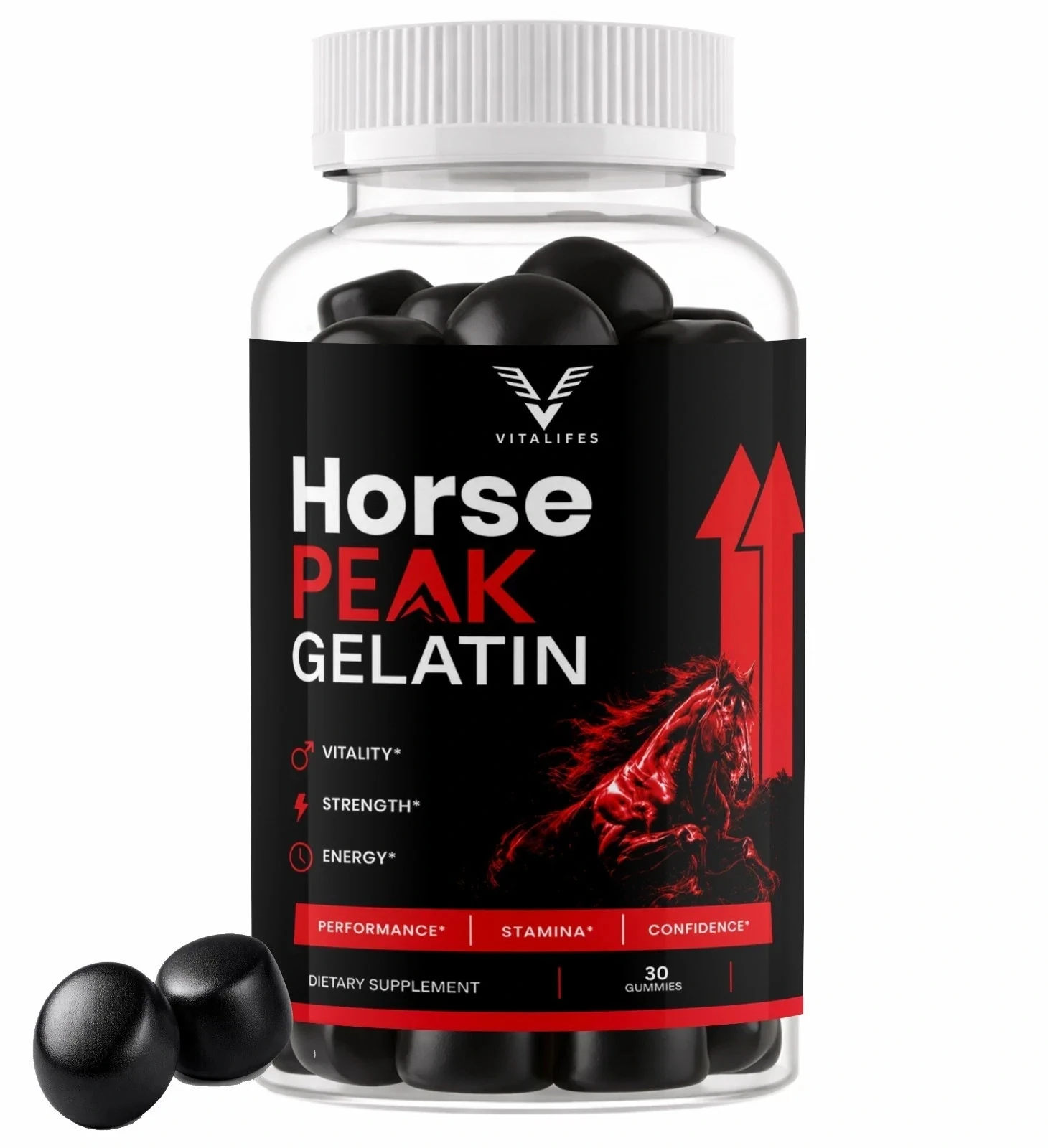
Horse Peak Gelatin prints an amount against every active
Which is what makes the checks in this guide possible on it at all. 60 days from the date of purchase to change your mind.
Two bottles $158 · six bottles $294 · 60-day money-back guarantee
Order Horse Peak Gelatin On The Official WebsiteOne gummy a day · 30 per bottle · lot HOR-26/MY-5544